



Discover Botswana’s extraordinary wildlife
From majestic elephants to graceful cheetahs.
From majestic elephants to graceful cheetahs.
Botswana is a true paradise for nature lovers and an incomparable destination for all who wish to experience the wild beauty of Africa. The untouched nature of the country provides a home for an impressive variety of animals – from powerful elephant herds in the Chobe National Park to elegant predators hunting in the vast plains of the Kalahari . But it's not just the "Big Five" that make Botswana so special. This country also delights with a wealth of unique wildlife that can be experienced up close in their natural habitats. Dive into Botswana's fascinating animal world and learn where and how to best observe these impressive creatures.


African Elephants
Habitat and Characteristics
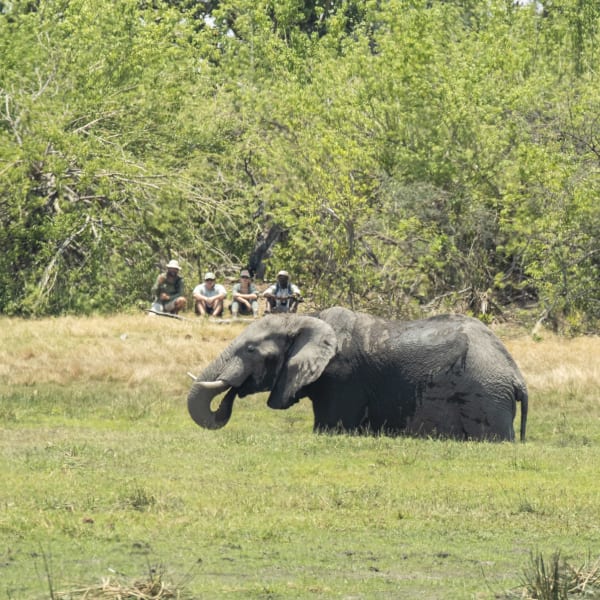
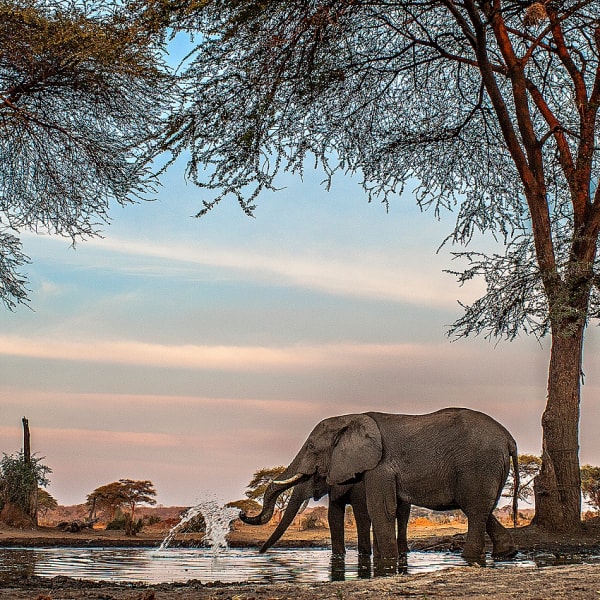
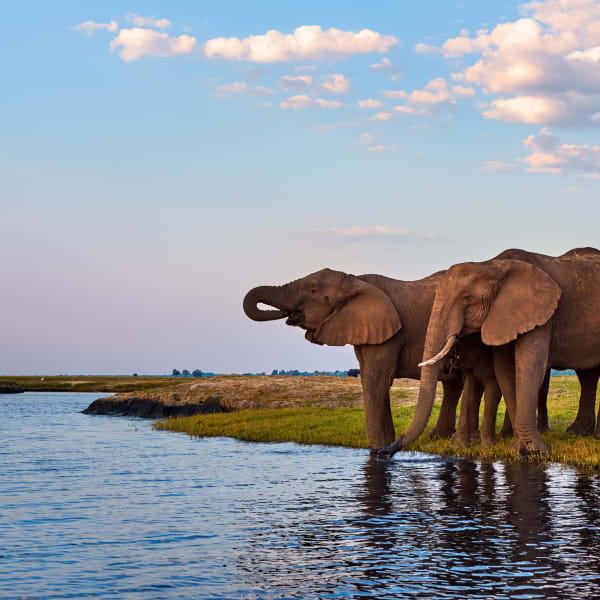
African elephants are one of the main attractions of Botswana and are among the most impressive animals on the continent. Botswana is home to the largest elephant population in Africa, with an estimated over 130,000 individuals. Areas such as the Chobe National Park , the Okavango Delta, and the Linyanti region are particularly densely populated. These animals follow ancient migration routes and gather along rivers and waterholes during the dry season.
The elephants of Botswana impress with their adaptability: Their tusks serve not only for defense but also for digging for water. Their large ears regulate their body temperature while they play a crucial role in spreading important seeds through their feeding behavior and shaping habitats. With their intelligence and social behavior, they are a fascinating part of Botswana's wildlife.
Behavior and Ecological Importance
As "landscape gardeners of Africa," elephants play a central role in Botswana's ecosystem. By eating vegetation, they open up dense forests and create habitats for other animals. They also disperse plant seeds over large distances through their dung, promoting vegetation regeneration.
Their social behavior is equally impressive. Elephants live in matriarchal herds led by experienced females. These family groups consist of up to ten animals, which often join together to form larger communities. Their seasonal migrations, adapted to the availability of water and food, are essential for the survival of these majestic animals.
The best places and times for unforgettable wildlife observations
Botswana is world-renowned for elephant safaris. The best locations include Chobe National Park, where massive herds can be observed along the Chobe River during the dry season, and the Okavango Delta , which offers spectacular sightings from a boat. Less crowded yet just as impressive is the Linyanti region.
The dry season from May to October is ideal for seeing elephants in large numbers as they gather at remaining waterholes. Particularly August to October offers breathtaking scenes as the animals congregate at the Chobe River. For a different experience, visitors can admire newborn elephant calves and enjoy the lush landscapes during the green season (November to April).
Whether on a boat safari, guided walk, or photo hide – Botswana offers unique opportunities to get close to these gentle giants. It is important to maintain a respectful distance to ensure the welfare of the animals and your own safety.
Lions
Habitat and Characteristics
Lions are among the most fascinating animals in Botswana and can be found in various regions. Particularly the Okavango Delta, Chobe National Park, the Central Kalahari Game Reserve , and the Khwai region are home to these majestic predators. Lions in Botswana have adapted excellently to their environment:
In the Okavango Delta, they skillfully cross channels and floodplains, developing stronger forelimbs. Kalahari lions, on the other hand, are leaner, long-legged, and capable of covering long distances in the dry savanna. With their high heat resistance and ability to go long periods without water, they are perfectly adapted to the extreme conditions of the region. Their hunting strategies also vary – from hunting large prey in the delta to pursuing small, agile animals in the Kalahari.
Behavior and Ecological Importance
As apex predators, lions play an essential role in the ecological balance of Botswana. They control populations of large herbivores such as buffalo and zebras, preventing overgrazing and promoting plant diversity. By hunting weak or sick animals, they strengthen the health of the prey species. Even after hunting, they contribute to the food chain as their carcasses benefit scavengers and the soil.
Their social behavior is equally fascinating: Lions live in prides dominated by females, while males defend territories as coalitions. Females often synchronize their reproduction, facilitating the cooperative upbringing of the young. This complex group life offers not only protection but also strategic advantages in hunting and territory defense.
The best places and times for unforgettable wildlife observations
Botswana is a paradise for lion watching. The best chances are found in Chobe National Park, especially the Savute region, as well as the Moremi Game Reserve and the Okavango Delta. The Central Kalahari Game Reserve is the ideal place to discover the impressive Kalahari lions. Less-visited regions such as Linyanti and Selinda are also known for their high lion density.
The best time for a safari is during the dry season from April to October, as lions concentrate around waterholes. They are particularly active in the early morning and late afternoon. Patience and a guided safari with experienced rangers increase the chances of experiencing these majestic animals in their natural habitat. Don’t forget to maintain a respectful distance to protect both the lions and yourself – an unforgettable experience is guaranteed!


Leopards
Habitat and Characteristics
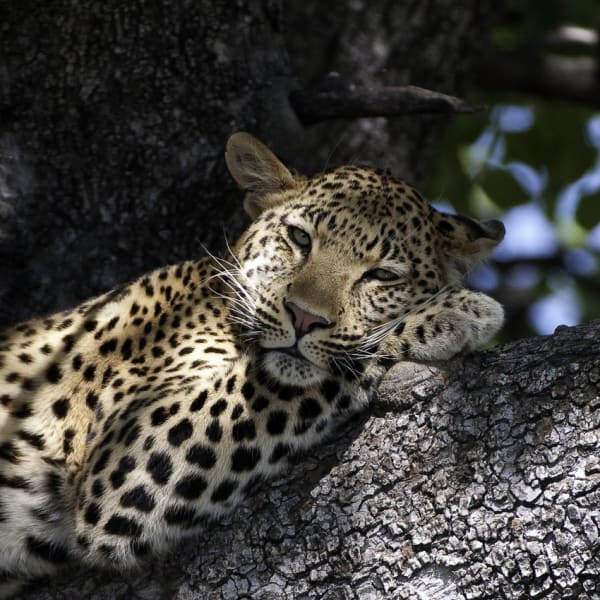
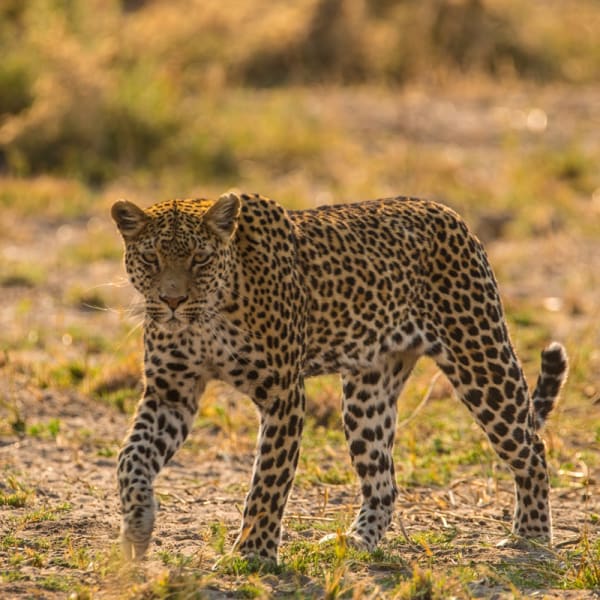
Leopards are widespread in Botswana and impressively adapt to different habitats. Particularly known for their leopard populations are the Okavango Delta, the Linyanti region, and the Savuti area of Chobe National Park. These regions provide an ideal combination of dense vegetation and open plains, serving as both hunting grounds and retreats.
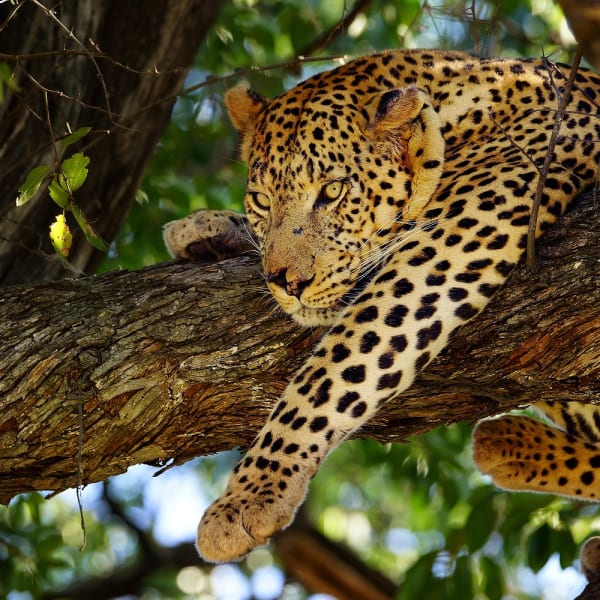
With their spotted coats, leopards are true masters of camouflage, helping them hunt unnoticed in their habitat. Their hunting behavior is marked by patience – they sneak up on their prey, often for hours. A unique feature is that leopards drag their prey into trees to protect it from other predators. Their adaptability ranges from the water-rich areas of the Okavango Delta to the dry plains of the Kalahari, making them one of the most versatile predators in Botswana.
Behavior and Ecological Importance
As solitary hunters, leopards play an important role in the ecological balance of Botswana. They regulate the populations of their prey species, thus contributing to the prevention of overgrazing. Through their hunting activities, they also promote a stable food web and support the nutrient cycle as scavengers.
Their behavior is characterized by territoriality: Leopards mark their territory with scent markings and scratch marks to keep other predators at bay. Females and their young move within smaller territories, while males claim larger areas that often encompass several female territories. Mating occurs year-round, with the rainy season being particularly active. Young remain with their mother for up to two years, learning essential hunting and survival skills during this time.
The best places and times for unforgettable wildlife observations
Botswana offers fantastic opportunities to experience leopards in the wild. The Moremi Game Reserve in the Okavango Delta is renowned for its extraordinary leopard sightings, especially along the Khwai River. The Linyanti region, with its varied landscape, and the Savuti area of Chobe National Park are also hotspots for observing these elegant predators.
The best chances to see leopards are in the early morning and dusk when they are actively hunting. Guides play a crucial role in successful sightings: they recognize tracks and alarm signals from other animals and often know the leopards' preferred hangouts. The dry season from May to October is considered optimal travel time, as the animals can be found at waterholes during this period. With an experienced guide and some patience, your search for the elusive leopard in Botswana will become an unforgettable experience.
Hippos
Habitat and Characteristics
Hippos are iconic residents of Botswana and a fascinating part of the country's aquatic ecosystems. They are particularly common in the Okavango Delta, along the Chobe River, and in the Moremi Game Reserve. These semi-aquatic animals spend most of the day in the water to regulate their body temperature and protect their sensitive skin from the sun.
With their barrel-shaped bodies and high-set sensory organs, hippos are perfectly adapted to life in the water. They can move with astonishing ease along the bottom of waters, submerging for up to five minutes. Their thick, almost hairless skin produces a reddish liquid that serves as a natural sunscreen and antibacterial agent. These unique features allow hippos to thrive successfully in Botswana's wetlands.
Behavior and Ecological Importance
Hippos are a keystone species for Botswana's aquatic ecosystems. Their dung provides waters with essential nutrients like silicon, which forms the basis for the growth of diatoms. These algae constitute a central food chain in rivers and lakes, as they produce oxygen and support the lives of countless organisms.
Hippos live in groups of up to 30 animals, led by a dominant male. They exhibit strong territorial behavior, marking their territory and defending it aggressively when necessary. While they stay in the water during the day, they graze on land at night, consuming up to 40 kilograms of vegetation. These activities promote biodiversity by creating open areas and access to waterholes.
The best places and times for unforgettable wildlife observations
Botswana is one of the best places to observe hippos in the wild. Top destinations include the Okavango Delta, the Chobe National Park , and the Moremi Game Reserve. Especially along the Chobe River, you can experience hippos in large numbers, often in conjunction with spectacular boat safaris.
The dry season from May to October is ideal, as hippos concentrate around the remaining water sources. A particularly appealing option is a mokoro tour in the Okavango Delta – a safari in traditional dugout canoes that offers a quiet and intimate approach to these animals. However, always remember to maintain a respectful distance and follow your guides' instructions to ensure a safe and enriching encounter.

Giraffes
Habitat and Characteristics
Giraffes are among the most distinctive inhabitants of Botswana, adding a special grace to the landscape. They prefer the vast savannas and tree savannas that characterize the land and are widespread in protected areas such as the Okavango Delta, the Kalahari, and eastern Botswana. Here they find optimal living conditions to thrive undisturbed.
Their adaptations to this environment are impressive: With their long necks and tongues up to 50 cm long, they can reach leaves and shoots from acacia trees that are inaccessible to other animals. Giraffes can go weeks without water, as they meet their fluid needs through succulent leaves. Moreover, their distinctive coat pattern not only provides camouflage but also protection in Botswana's vast savannas. Their social structures are flexible: females form smaller herds while males are often solitary.
Behavior and Ecological Importance
Giraffes are true "gardeners of the savanna" and have a significant impact on their environment. Their selective feeding behavior promotes the growth and structure of trees and bushes, creating open landscapes that are vital for many other animal species. They also contribute to the regeneration of vegetation by dispersing plant seeds over long distances.
Their social structures are remarkably flexible: females often live in groups of up to 32 animals, while males either roam alone or form bachelor groups. Exciting is also their behavior during the mating season when male giraffes engage in "necking" battles with their necks to establish dominance – an impressive spectacle of nature. Their ability to communicate ranges from infrasound to visual signals and movements of their necks and tails.
The best places and times for unforgettable wildlife observations
Botswana offers numerous opportunities to observe giraffes in their natural habitat. Particularly popular places are Chobe National Park, where the diverse landscape creates ideal conditions, and the Moremi Game Reserve in the Okavango Delta, which attracts giraffes with its variety of lagoons, acacia forests, and floodplains. For a contrasting backdrop, the Central Kalahari Game Reserve is recommended, where giraffes live in the stunning desert landscape.
The dry season from May to October is considered the best time for giraffe watching as the animals gather at waterholes, and the sparse vegetation provides better visibility. Particularly in the early morning or late afternoon, giraffes are most active. A unique perspective is offered by boat safaris in Chobe National Park, where visitors can observe giraffes drinking at the riverbanks – a spectacular sight as they must spread their legs wide to reach the water. Patience and endurance are key to unforgettable encounters with these majestic animals.

Cheetahs
Habitat and Characteristics
Cheetahs are true masters of speed and are among the most fascinating predators of Botswana. They can primarily be found in the Central Kalahari Game Reserve, where its expansive savannas and dry riverbeds provide perfect conditions for their hunting. The Kalahari Desert, with its red sand dunes and sparse vegetation, is another important refuge for these fast hunters.
Their physical traits are optimally adapted to their lifestyle: a slim, aerodynamic body, non-retractable claws for better grip, and a long tail that serves as a "rudder" during quick turns. With these features, they can reach top speeds of up to 120 km/h in just a few seconds – a capability that gives them a vital advantage in Botswana's vast landscape.
Behavior and Ecological Importance
As specialized hunters, cheetahs are crucial for the balance of Botswana's ecosystem. They regulate the populations of smaller ungulates such as gazelles and impalas by primarily preying on weak or sick animals. This selective hunting contributes to the health of prey species and the biodiversity in their habitats.
Their hunting behavior is as impressive as their speed: Cheetahs sneak up on their prey and then launch a short, explosive sprint. However, after the hunt, they require a period of rest to recover their strength. Although they usually live as solitary animals, male cheetahs occasionally share territories or form small groups. Females, on the other hand, raise their young alone and teach them the necessary survival skills.
The best places and times for unforgettable wildlife observations
Botswana offers numerous opportunities to observe cheetahs in the wild. The Central Kalahari Game Reserve is the top destination, especially in areas like Deception Valley and Passarge Valley. The Moremi Game Reserve and Nxai Pan National Park also provide good chances to see cheetahs in action, particularly during the dry season from May to October when the animals can be found at waterholes.
For the best results, it is advisable to book safaris with experienced guides who have in-depth knowledge of the wildlife and can often read tracks. Early mornings or late afternoons are the best times for sightings as cheetahs are most active during these periods. Patience and endurance are essential; those who bring these will be rewarded with an unforgettable experience: the sight of one of Africa's most elegant hunters in its natural habitat.
Ostriches
Habitat and Characteristics
Ostriches are fascinating inhabitants of Botswana and the largest birds in the world. They prefer open landscapes such as savannas, semi-deserts, and grasslands, which provide them with good visibility and quick movement. In Botswana, they are especially found in regions with low grass and few trees, such as the Central Kalahari and the Makgadikgadi salt pans.
Their impressive speed of up to 70-80 km/h makes them excellent sprinters, capable of easily escaping from predators. Ostriches have perfectly adapted to Botswana's dry conditions: they fully meet their fluid needs through their diet and are both herbivores and occasional carnivores. With their adaptability and unique reproductive strategies, they play a significant role in Botswana's biodiversity.
Behavior and Ecological Importance
Ostriches play a significant role in the ecosystem. As herbivores, they contribute to the dispersal of plants through their diet of grasses, seeds, and fruits. Seeds that pass through their digestive system often only germinate after their passage, promoting the spread of certain plant species.
Their social behavior is also remarkable: ostriches live in groups of up to 50 animals, often together with other herbivores like antelopes. During the breeding season, several females lay their eggs in a communal nest, with a dominant male and a "main hen" taking on the primary responsibility. This communal nesting system increases the survival chances of the chicks and is a fascinating example of cooperative parenting.
The best places and times for unforgettable wildlife observations
Botswana offers numerous opportunities to observe ostriches in the wild. The Central Kalahari is one of the best places as its open grasslands provide ideal conditions. The Makgadikgadi salt pans are also spectacular, especially during the rainy season from November to March when fresh greenery attracts many animals. Nxai Pan National Park is also a hotspot for ostrich sightings.
The dry season from May to October is ideal for wildlife observation as many animals gather at remaining waterholes. During the rainy season, however, ostriches are often seen in larger groups. Guided safaris through these regions or a combined route offer the best chances to experience these impressive birds. With binoculars and some patience, you can admire ostriches up close in their natural habitat.
African Wild Dogs


Habitat and Characteristics
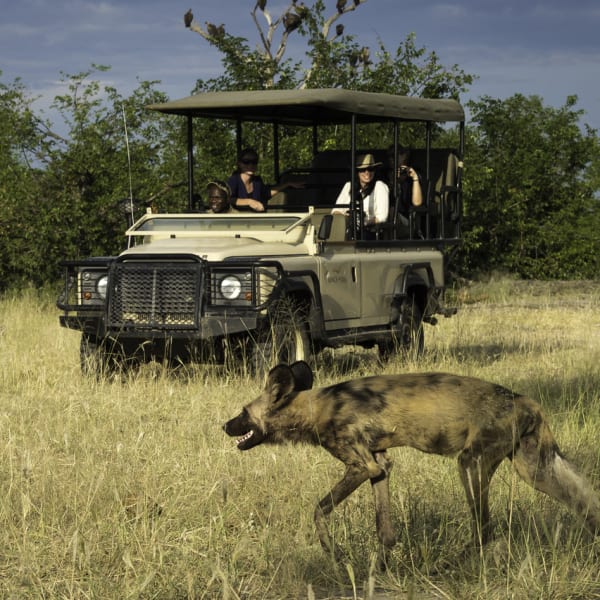
African wild dogs, also known as painted wolves, are among the most fascinating and simultaneously endangered predators in Africa. Botswana is home to the second-largest population of these animals on the continent, with over 1,300 individuals in around 130 packs. The best habitats include the Okavango Delta, especially the Moremi Game Reserve and the Khwai region, as well as the Linyanti area and the Savuti region in Chobe National Park.
These areas offer an ideal combination of open floodplains and woodlands, providing the wild dogs with both shelter and optimal hunting opportunities. African wild dogs live in close-knit social groups and display remarkable adaptability. Their pack behavior, characterized by cooperation and shared care, ensures their survival in the wild and makes them an impressive component of Botswana's ecosystems.
Behavior and ecological importance
The African wild dogs are among the most effective hunters in Africa, with success rates of up to 90% during hunts. This efficiency is attributed to their hunting strategy, which is based on short, fast sprints rather than long chases. As a result, they can successfully hunt in both dense forests and open savannas.
Their prey often consists of old or sick animals, which contributes to the health of prey populations and promotes biodiversity. Additionally, they indirectly regulate populations of other animals like baboons, supporting the balance in the ecosystem. Their highly developed social behavior is reflected in a strict pack structure: An alpha pair leads the pack while all members actively contribute to raising the pups and caring for injured animals. This cooperative lifestyle makes them a prime example of successful teamwork in the animal kingdom.
The best places and times for unforgettable wildlife watching
Botswana is one of the best countries to observe African wild dogs in their natural habitat. The optimal places for sightings are the Moremi Game Reserve and the Khwai region in the Okavango Delta, the Linyanti-Kwando region, as well as the Savuti region in the Chobe National Park .
The best time to see these fascinating animals is during the dry season between May and October. Especially from June to September, the packs often stay close to their dens as they raise their pups during this time. From September to November, the packs are more active but only move short distances, making observations easier.
To maximize the chances of a sighting, it is advisable to visit specialized camps like Lagoon or Lebala Camp and rely on the expertise of experienced guides. Patience, endurance, and good planning are key to experiencing these rare animals in action – an unforgettable experience that showcases Botswana's wilderness at its best.
Rhinoceroses
Habitat and characteristics
Rhinoceroses are among the most majestic animals in Botswana, having found a new home in specially protected areas. The most important habitats include the Khama Rhino Sanctuary, which was established in 1992 and now covers around 8,585 hectares, as well as the Okavango Delta, where white rhinos have been successfully reintroduced. Occasionally, rhinos can also be observed in the Chobe area. In total, approximately 500 rhinos live in Botswana, mainly white rhinos.
White rhinos impress with their size of up to 3.5 tons and their wide mouths, which are perfectly adapted for grazing on grasslands. In contrast, black rhinos have pointed mouths that allow them to selectively browse leaves and twigs. Both species have two distinctive horns that serve not only for defense but also for foraging. Conservation programs and security measures, supported by relocation projects and anti-poaching initiatives, play a crucial role in preserving these endangered species in Botswana.
Behavior and ecological importance
Rhinoceroses are not only fascinating creatures but also fulfill an important role in the ecosystem. As herbivores, they contribute to shaping the landscape by keeping grasslands open and thus creating habitats for other species. White rhinos often graze so close to the ground that they leave firebreaks that protect other animals from wildfires. On the other hand, black rhinos prevent scrub encroachment in the savanna by browsing on branches and leaves.
Their behavior is characterized by established daily routines and social structures. Rhinos typically live as solitary animals, but in savannas, they occasionally form small herds. They communicate through sounds like grunts or snorts and live in symbiosis with birds such as oxpeckers, which protect them from parasites. Rhinos are also particularly important for the nutrient cycle, as they disperse seeds over long distances and maintain water holes through their wallowing.
The best places and times for unforgettable wildlife watching
The Khama Rhino Sanctuary is the best place in Botswana to observe rhinos in the wild. Here, both white and black rhinos live, closely monitored through conservation measures. In addition to this sanctuary, the Okavango Delta and the Chobe area are also potential sites for sightings.
The best time to observe rhinos is early in the morning or late in the afternoon, as they are particularly active during these times. Guided tours with experienced rangers provide the best opportunity to experience these animals from a safe distance. Visitors should always adhere to the guides' instructions to ensure both their own safety and the wellbeing of the animals. With overnight stays in conservation areas like the Khama Rhino Sanctuary, travelers can also directly support the conservation projects and thus contribute to the preservation of these impressive animals.
Nile crocodiles
Habitat and characteristics
Nile crocodiles are true masters of survival and are among the most fascinating residents of Botswana. They can mainly be found in the Okavango Delta and the surrounding river systems, including the Chobe, Cuando, and Linyanti Rivers. The Okavango Delta, especially the northern 'Panhandle', offers them an ideal habitat with its waterways, wetlands, and islands, where over 90% of the known nests can be found.
These impressive reptiles can reach lengths of up to six meters and weights of over 700 kilograms. Their thick, bony skin protects them from enemies, while their powerful jaws make them feared predators. Nile crocodiles are perfectly adapted to life in water: With eyes, ears, and nostrils positioned on top of their heads, they can breathe and observe while the rest of their bodies remain submerged.
Behavior and ecological importance
Nile crocodiles are not only fascinating hunters but also essential players in Botswana's ecosystems. As apex predators, they regulate fish and other prey populations, contributing to an ecological balance. Additionally, their dung promotes the nutrient supply for fish and plants in the wetlands, which increases biodiversity.
Their hunting technique is particularly impressive: They patiently lie in wait at the water's edge to surprise prey with a lightning-fast attack. Nile crocodiles can even overpower larger animals such as antelopes by dragging them into the water with their signature 'death roll'. Despite their strength, they show remarkable care for their offspring – from choosing the nesting site to protecting the young.
The best places and times for unforgettable wildlife watching
Botswana offers numerous opportunities to observe Nile crocodiles in their natural environment. Particularly recommended are the Okavango Delta and the Chobe River. The 'Panhandle' of the Delta is a hotspot for crocodile sightings, especially in the cooler months of June and July when the animals are often seen on the shores.
Boat safaris on the Chobe River provide a safe and impressive way to observe sunbathing crocodiles up close. Guided tours with experienced rangers ensure a safe experience – whether on the water or from land. The dry season from May to October is ideal, as crocodiles gather at the few remaining waterholes. With some patience and respect for these prehistoric animals, your observations can become an unforgettable adventure in Botswana's wilderness.
A gift of nature
Botswana is much more than a travel destination – it is a place where the magic of nature is palpable in its purest form. The extraordinary diversity of animals that live in the savannas, river landscapes, and wetlands of the country speaks of a unique ecosystem that is unmatched worldwide.
Every Botswana safari , every glimpse into the vast wilderness of Botswana provides unforgettable moments – from majestic herds of elephants to silent hunters like leopards and cheetahs. But this fascinating wildlife is not only an experience for the senses but also a valuable treasure that must be protected and preserved. Botswana reminds us how important it is to nurture our connection to nature and secure its preservation for future generations.
Experience the magic of Africa with experts who have explored every corner themselves
Your dream holiday, tailor-made by experts.
Our travel consultants not only admire Africa from afar, but explore the most impressive regions every year to experience the cultures, landscapes and safari experiences first-hand.
From the initial inspiration to the moment you return home full of stories, we will accompany you personally - be it by phone, email or WhatsApp, whenever you need us. Explore the wilderness of Africa, be enchanted by its breathtaking beauty and create unforgettable memories. Together we will create your unique safari adventure!
Experts for your Africa trip