


Top Attractions in South Africa
A Land of Unforgettable Experiences
A Land of Unforgettable Experiences
Breathtaking landscapes, fascinating wildlife, and a rich, complex history— South Africa offers travelers an incredible variety of experiences. From majestic mountains and scenic coastal drives to historic cities and world-renowned safari parks, there's something for everyone to explore. This list takes you through the country's most stunning sights—must-visit destinations that will make your trip truly unforgettable.

- Table Mountain – Cape Town's Landmark
- Cape of Good Hope – Where Two Oceans Meet
- Kruger National Park – A Safari Experience of the Highest Order
- Blyde River Canyon – Spectacular Natural Setting
- Robben Island – Experience History Up Close
- Garden Route – South Africa's most beautiful scenic route
- Drakensberg – A paradise for hikers
- Stellenbosch & the Wine Region – Enjoyment and History
- iSimangaliso Wetland Park – Pristine natural diversity
- Johannesburg & Apartheid Museum – Insights into South Africa's history
- South Africa's attractions – A journey full of diversity

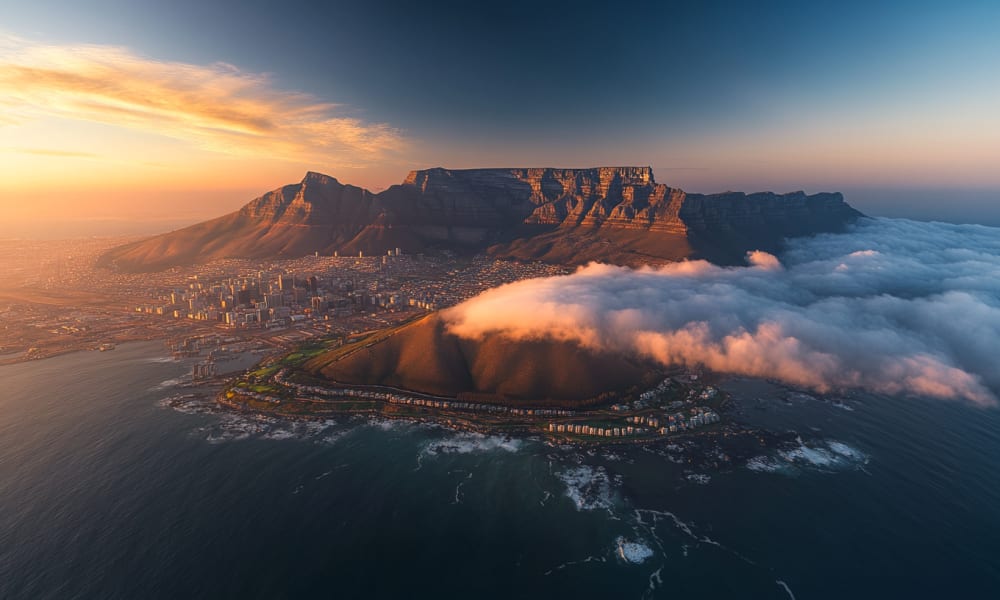
Table Mountain – Cape Town's Landmark
Features and Significance
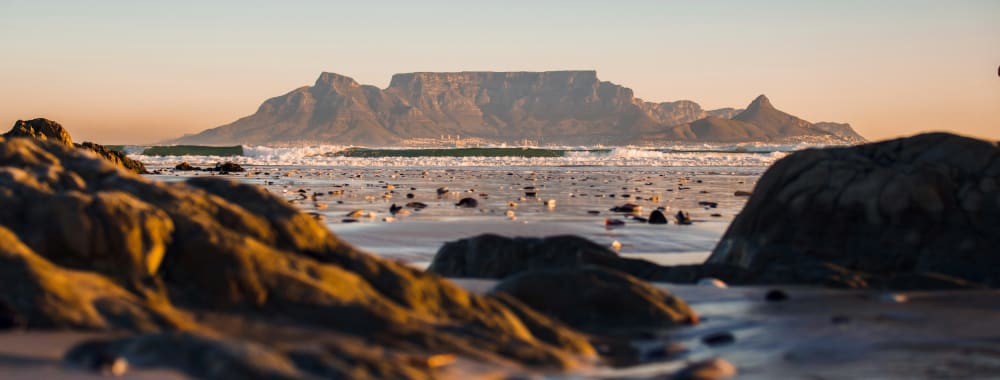
Table Mountain is perhaps the most famous landmark in South Africa and shapes the silhouette of Cape Town. Its distinctive flat summit gave it its name and makes it one of the most well-known natural wonders of the world. With an elevation of 1,087 meters at Maclear’s Beacon, it is the highest point of the Cape Peninsula and extends over 6,500 hectares – a paradise for nature lovers.
Geologically, Table Mountain belongs to the oldest mountains on Earth: formed over 600 million years ago, it primarily consists of quartzitic sandstone shaped by wind and water erosion. The mountain is also a biodiversity hotspot, boasting over 2,200 plant species, many of which are endemic. Furthermore, it is part of the Cape Floral Kingdom, which is a UNESCO World Heritage site.
For the indigenous Khoi peoples, the mountain holds spiritual significance - they call it "Hoerikwaggo" (“Mountain in the Sea”). Today, Table Mountain is an inspiration for artists, photographers, and travelers from around the world, who delight in its imposing beauty.
Highlights and Activities on Site
Whether adventure or relaxation – Table Mountain has something for everyone:
- Hiking: There are numerous trails with varying degrees of difficulty. The Platteklip Gorge Trail (approx. 5.5 km, 2–3 hours) is the most direct route to the top, while the Skeleton Gorge Trail (7 km, 4–6 hours) winds through lush vegetation.
- Aerial Cableway: For those who prefer a more comfortable option, the famous Table Mountain Aerial Cableway can be taken. In just 5 minutes, it transports visitors to the summit – with rotating cabins for a 360-degree panoramic view.
- Abseiling: For adrenaline junkies, there is the option to abseil 112 meters from the summit – an unparalleled experience with spectacular views.
- Nature and Wildlife: The mountain is part of the Cape Floral Kingdom and features a fascinating plant world. A notable natural spectacle is the famous "Tablecloth", a cloud cover that often drapes over the summit.
From above, you can enjoy a breathtaking view of Cape Town, the Atlantic Ocean, and famous places like Robben Island, Signal Hill, and Lion’s Head.
Best Time to Visit and Practical Tips
The best time to visit is between October and April, when it is summer in Cape Town. Especially December to February are ideal for clear visibility and warm weather. Those who wish to avoid crowds should plan their visit in the shoulder season (October–November or March–April).
- Cableway Operating Hours: The first cable car departs at 8 a.m.; the last descent varies by season between 8:30 p.m. and 9:00 p.m. During peak season, it is advisable to book tickets online in advance to avoid long waiting times.
- Weather Awareness: Weather conditions can change rapidly on Table Mountain. Warm clothing and sturdy footwear are recommended even on sunny days. It is advisable to check the current weather conditions before your visit.
- Start Early: Particularly for hikers: Leave in the morning to escape the midday heat and enjoy the best lighting for photographs.
Table Mountain is not just a sight to behold, but an unforgettable experience that enriches any trip to South Africa.


Cape of Good Hope – Where Two Oceans Meet
Features and Significance
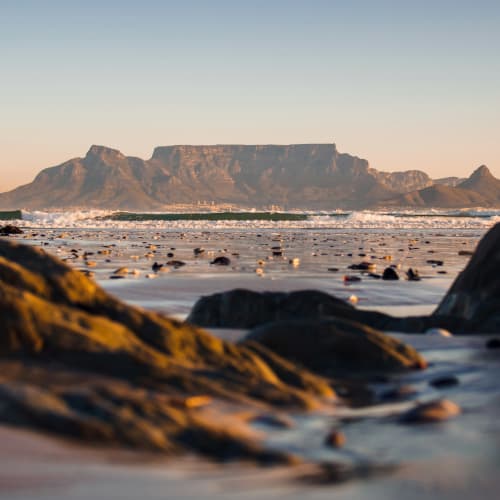
The Cape of Good Hope is one of the most striking places in Africa and an absolute highlight of any trip to South Africa. Although it is often referred to as the point where the Atlantic and Indian Oceans meet, this actually occurs further south at Cape Agulhas. Nevertheless, the Cape marks the southwesternmost point of the continent and has been a significant landmark for sailors for centuries.
The Cape was discovered in 1488 by Bartolomeu Diaz, who initially called it the "Cape of Storms" due to the dangerous storms. Later, it was renamed by King John II of Portugal to "Cape of Good Hope" as he viewed it as a promising route to India. The strong currents and monstrous waves, however, made the area notorious for shipwrecks – hence numerous myths revolve around the Cape.
One of the most well-known is the legend of the Flying Dutchman, a cursed ghost ship said to sail around the Cape forever. Additionally, a Portuguese legend tells that the titan Adamastor was transformed into a mountain at the Cape to hinder sailors from passing.
Whether through its dramatic history or its spectacular nature – the Cape of Good Hope has captivated visitors for centuries.
Highlights and Activities on Site
The Cape of Good Hope is part of the Table Mountain National Park and offers numerous hiking trails, breathtaking viewpoints, and unspoiled beaches:
- Hiking Trails & Shipwrecks: The Cape of Good Hope Trail (3.5 km) leads from the Cape to Cape Point, while the Thomas T. Tucker Trail leads to a famous shipwreck. More challenging tours like the Kanonkop Trail (5.5 km) offer spectacular views of False Bay.
- Cape Highlights: From the Cape Point Lighthouse, there is an impressive view of the cliffs and the endless sea. Olifantsbos Beach is a quiet, hidden spot away from the tourist crowds.
- Beaches & Nature Pools: Diaz Beach, with its white sand and turquoise water, is among the most beautiful beaches in South Africa. Those seeking a refresh can swim and snorkel in the Venus Pools – natural rock pools with crystal-clear water.
- Wildlife Watching: The Cape is home to many wildlife species. Besides baboons (especially at Diaz Beach), ostriches, antelopes, and bonteboks can also be observed. In False Bay, whales are often seen from June to November.
Best Time to Visit and Practical Tips
The ideal time to visit the Cape of Good Hope is between October and April, when the weather is mild and sunny. The peak season from December to February is dry and hot but also crowded with tourists. To experience the Cape peacefully, one should thus take advantage of the shoulder season (October–November or March–April).
- Getting There: There are two scenically impressive routes:
- East Side (False Bay): Through Muizenberg, Kalk Bay, and Simon’s Town – perfect for a stop to see the penguins at Boulders Beach.
- West Side: Through Chapman’s Peak Drive, one of the most beautiful coastal roads in the world, with stops in Hout Bay and Noordhoek.
- Tip: Choose one route for the outbound journey, the other for the return!
- Entry: Access to the Cape of Good Hope is through the Table Mountain National Park, which charges an entry fee.
- Important Tips:
- The roads to the Cape are weather-dependent, especially Chapman’s Peak Drive can occasionally be closed.
- Leave early to avoid crowds and have enough time for hikes and photo stops.
- Beware of baboons – they are curious and love to steal food!
For an unforgettable experience, the Cape can even be explored from the air – a helicopter flight along the Cape Peninsula offers spectacular views of this legendary place.
Kruger National Park – A Safari Experience of the Highest Order
Features and Significance
The Kruger National Park is one of the largest and most significant wildlife reserves in Africa. With an area of around 20,000 square kilometers, it provides habitat for an incredible diversity of species. Here, 147 species of mammals reside, including the famous Big Five – lion, leopard, elephant, rhinoceros, and buffalo – as well as over 500 species of birds, 114 species of reptiles, and 49 species of fish.
The park was established in 1898 as the Sabie Game Reserve and gained national park status in 1926 – a milestone in African conservation. Today it is part of the transboundary Great Limpopo Transfrontier Park, which extends into Mozambique and Zimbabwe.
In addition to its impressive species richness, Kruger National Park plays a central role in the protection of endangered species, including rhinoceroses and elephants. At the same time, it serves as a significant research area for wildlife ecology. However, the park faces challenges: poaching, overpopulation of certain species, and social justice issues continue to be topics that conservationists deal with. Despite these challenges, Kruger National Park remains a global model for sustainable conservation and an unforgettable safari experience.
Highlights and Activities on Site
In Kruger National Park, there are countless opportunities to experience the unique wildlife up close:
- Big Five & More: In addition to elephants, lions, and leopards, you can also observe giraffes, zebras, hippopotamuses, cheetahs, hyenas, and African wild dogs. The park is also home to over 500 bird species, including the African Fish Eagle and the rare Saddle-billed Stork.
- Various Safari Experiences:
- Guided Safaris: Morning safaris, full-day tours, and night safaris in open vehicles.
- Bush Walks: On foot with experienced rangers tracing wildlife.
- Self-drive Safaris: Explore the park independently on well-marked routes.
- Special Experiences:
- Visit the Moholoholo Wildlife Rehabilitation Centre, a shelter for injured wildlife.
- Traditional Bush Braais (barbecues in the wilderness).
- Multi-day safari packages with accommodation in lodges or camps.
Whether by jeep, on foot, or independently – Kruger National Park offers a safari adventure for every taste.
Best Time to Visit and Practical Tips
The best time for a safari in Kruger National Park is during the dry season from May to October. During these months, temperatures are pleasant, the vegetation is sparser, and animals gather at the few water sources – ideal conditions for wildlife viewing.
- Best Months: August & September offer particularly good visibility and moderate temperatures.
- Dry Season (May–October):
- Warm during the day, cool at night – warm clothing for the evenings is recommended.
- Animals are easier to see as the grass is low.
- Rainy Season (November–April):
- Temperatures can rise above 35 °C.
- Denser vegetation makes visibility more difficult, but it is the best time for birdwatching and newborn animals.
For overnight stays, there are numerous safari lodges and camps, from luxury accommodations to affordable self-catering cabins. Many lodges offer all-inclusive packages with game drives. It is advisable to book accommodations and tours in advance, especially in the high season.
Kruger National Park is a true paradise for safari fans – a place where one can experience Africa's wild beauty in all its glory.

Blyde River Canyon – Spectacular Natural Setting
Features and Significance
The Blyde River Canyon, with its 26 kilometers in length and up to 800 meters in depth, is one of the largest canyons in the world – and is simultaneously the largest "green canyon" on Earth. Unlike many other canyons, it is known for its lush subtropical vegetation, which gives it a unique appearance.
Geologically, the canyon is characterized by red sandstone, shaped over millions of years by erosion. Among its most impressive formations are the "Three Rondavels", three round rocks that resemble traditional African round huts, as well as the Bourke’s Luck Potholes, fascinating whirlpools formed by millennia of water flow.
In addition to the stunning landscape, the canyon is home to extraordinary biodiversity with over 1,000 plant species as well as numerous bird and animal species. The combination of geological diversity, breathtaking views, and lush nature makes Blyde River Canyon one of the most spectacular natural landscapes in South Africa.
Highlights and Activities on Site
The region offers numerous viewpoints and outdoor activities:
- Three Rondavels: One of the most famous viewpoints with a spectacular view of the round rock formations and the bend of the Blyde River. A short walk leads to several panoramic spots along the cliff edge.
- God’s Window: Another highlight of the Panorama Route – a viewpoint at 1,219 meters above sea level that offers a view as far as Mozambique on clear days.
- Hiking: Several hiking trails traverse the region, including the Leopard Trail, the Jock of the Bushveld Trail, and the Belvedere Day Walk, which lead through diverse landscapes.
- Boat Tours on the Blyde Dam: A relaxed way to experience the canyon from the water and, with a bit of luck, spot hippos and crocodiles.
- Birdwatching: Especially raptors like the Taita Falcon, Verreaux's Eagle, and Cape Vulture can be well observed here.
- Helicopter Flights: For a spectacular aerial perspective, scenic flights over the canyon are available.
Best Time to Visit and Practical Tips
The best time to visit is during the South African autumn (March to May) or in spring (September to November), when the weather is mild and the landscape is lush and green. The months from April to September also offer pleasant temperatures around 25°C and little rainfall.
- Summer (November to March): High humidity and temperatures up to 40°C, occasional fog patches can impair visibility.
- Winter (June to August): Dry but cooler nights with temperatures of 5–15°C, the vegetation appears less lush.
Getting There & Tips:
- The canyon is about 3.5 hours from Johannesburg and 2 hours from Kruger National Park. The well-developed Panorama Route (R532) leads to the main viewpoints.
- Entry Fees: Access to the Three Rondavels Viewpoint costs 15 ZAR per person.
- Tour Options: Guided tours from Hazyview include transport, entry fees, and visits to the best viewpoints. Boat tours and helicopter flights provide additional spectacular perspectives.
Blyde River Canyon is one of South Africa's most impressive natural attractions and an absolute highlight for nature and photography enthusiasts.
Robben Island – Experience History Up Close
Features and Significance
Robben Island is a significant symbol of the victory of democracy over apartheid and was declared a UNESCO World Heritage site in 1999. The island played a central role in South Africa's history, particularly during the apartheid era, when it was used as a maximum-security prison for political prisoners.
Famous freedom fighters like Nelson Mandela, Walter Sisulu, and Ahmed Kathrada were imprisoned here. Nelson Mandela spent 18 of his 27 years on Robben Island, where he had to work under harsh conditions in the quarry. Despite the inhumane imprisonment conditions, the island became a place of resistance and education – inmates unofficially called it the “Mandela University” as Mandela created opportunities for further education for his fellow prisoners.
After the end of apartheid, Robben Island was transformed into a museum and memorial site. Today, the island serves as a reminder of past human rights violations and stands as a monument to freedom and equality. Visitors have the opportunity to immerse themselves in the island's turbulent history and hear firsthand from former political prisoners about what it meant to be incarcerated here.
Highlights and Activities on Site
A tour to Robben Island begins with a 30-minute ferry ride from the Nelson Mandela Gateway at the V&A Waterfront in Cape Town. During the crossing, spectacular views of Cape Town and Table Mountain can be enjoyed.
On the island, visitors can expect impressive historical sites:
- Cell No. 5 – The tiny prison cell where Nelson Mandela was incarcerated for 18 years.
- Block B – The area where high-profile political prisoners were housed.
- Prison yard and quarry – Places of forced labor and the quiet resistance of the prisoners.
- Tours with former inmates – Former political prisoners share their personal experiences and provide deep insights into life on Robben Island.
- Bus tour over the island – Visitors explore various historical sites, including:
- The former warder's village
- The house of Robert Sobukwe, who was held in solitary confinement here
- The cemetery for leprosy patients who were once interned on the island
- The lighthouse from 1865 and other relics from the time of military use
The complete tour lasts about 3.5 to 4 hours and provides a comprehensive insight into the history of apartheid and the struggle for freedom.
Best time to travel and practical visiting tips
The best time for a visit to Robben Island is during the South African summer months (November to March), as the sea is calmer and the weather is more stable. To avoid afternoon winds and possible tour cancellations, morning tours are recommended.
- Book tickets early: The tour is very popular – especially during the peak season (September to April), it is advisable to reserve tickets well in advance online.
- Tour times: Daily departures at 9:00, 11:00, and 13:00, additionally at 15:00 during peak season. Visitors should arrive at least 30 minutes before departure at the terminal.
- Clothing & equipment: Comfortable shoes, a jacket for windy crossings, and sun protection are advisable. Bringing snacks and water is sensible, as the catering options on the island are limited.
- Prices:
- Adults (Non-South Africans): approx. 600 ZAR
- Children (2–18 years, Non-South Africans): approx. 310 ZAR
- Adults (South Africans): approx. 400 ZAR
- Children (South Africans): approx. 210 ZAR
Robben Island is much more than a sightseeing spot – it is a place of remembrance that brings history to life and deeply moves visitors.
Garden Route – South Africa's most beautiful scenic route
Features and significance
The Garden Route is considered one of the most spectacular scenic routes in the world. It stretches over 300 kilometers from Mossel Bay to Port Elizabeth (Gqeberha) along South Africa's picturesque coast and offers a unique combination of mountains, beaches, dense forests, and scenic lagoons.
The route goes through some of the country's most beautiful natural landscapes, including the Tsitsikamma National Park, the semi-desert landscape of the Klein Karoo, and idyllic coastal towns like Knysna, Plettenberg Bay, and Wilderness. Thanks to its variety of outdoor activities and spectacular views, the Garden Route is one of the most popular travel destinations in South Africa.
Whether hiking, water sports, or wildlife watching – the Garden Route offers adventures for every taste. Here, travelers can go whale watching, hike through ancient forests, or relax on endless sandy beaches. Its versatility makes it an ideal destination for road trips and individualized travel.
Highlights and activities on site
The Garden Route is full of natural wonders and experiences:
- Tsitsikamma National Park: This spectacular park stretches along the coast and offers dramatic cliffs, dense forests, and deep gorges. The famous Storms River Suspension Bridge and the Otter Trail are among the highlights.
- Knysna Lagoon: The picturesque lagoon of Knysna is a paradise for boating and water sports. The nearby Brenton-on-Sea beach invites swimming and relaxing.
- Wilderness Beaches: The beaches of Wilderness and Plettenberg Bay are among the most beautiful along the Garden Route. Particularly Robberg Beach, Keurboom Beach, and Central Beach are ideal for swimming and sunbathing.
- Robberg Nature Reserve: An impressive coastal reserve with sandy beaches, sand dunes, and hiking trails along the cliffs. Seal colonies can often be observed here.
- Whale and dolphin watching: Between June and November, whales migrate along the coast, especially visible in Plettenberg Bay and Wilderness. Additionally, there are dolphin watching tours and guided kayaking tours.
- Adventure and sports: The region offers numerous activities such as surfing in Plettenberg Bay, sea kayaking in Knysna, or guided hikes in Tsitsikamma National Park.
Best time to travel and practical visiting tips
The best time to visit the Garden Route is between September and May when the weather is warm and stable. Especially from September to November is ideal for flower lovers, while summer (December to March) is peak season with lots of activity. Those seeking a quieter experience should travel in the shoulder season (March to May).
- Getting there & transportation: The Garden Route is best explored with a rental car to maximize flexibility. Rental cars are available in Cape Town or Port Elizabeth.
- Duration of travel: A trip along the Garden Route ideally takes 7 to 14 days to enjoy all the highlights.
- Accommodations: There are numerous hotels, guesthouses, and lodges along the route. It is advisable to choose accommodations with secure parking.
- Road conditions: The main road N2 is in very good condition, and gas stations with clean sanitary facilities are regularly available.
The Garden Route is an absolute highlight for anyone wanting to experience South Africa's breathtaking nature, beaches, and outdoor adventures. It combines the best of coast, mountains, and wildlife – an unforgettable road trip!
Drakensberg – A paradise for hikers
Features and significance
The Drakensberg are among the most spectacular mountain ranges in Africa and offer a unique combination of breathtaking nature, rich biodiversity, and cultural history. With peaks reaching up to 3,480 meters, the Drakensberg extend over more than 1,000 kilometers and are both scenically and geologically impressive. Their steep rock formations, green valleys, and spectacular waterfalls make them a popular destination for adventurers and nature enthusiasts.
The region is not only a UNESCO World Heritage Site but also a cultural sanctuary. In the caves and rock overhangs of the mountains, there are over 30,000 rock paintings by the San people, some of which are up to 2,400 years old and provide fascinating insights into the lives and spirituality of these early inhabitants. For the Zulu, the mountain range holds spiritual significance – they call it **"uKhahlamba" ("Barrier of Spears")**, a reference to the distinctive rock formations.
Thus, the Drakensberg combine spectacular landscapes with a rich cultural heritage and are a mecca for hikers, climbers, and history enthusiasts.
Highlights and activities on site
The Drakensberg offer some of the most beautiful hiking routes in South Africa, which lead through dramatic rock landscapes, deep gorges, and lush vegetation:
- Amphitheater & Tugela Falls Trek – One of the most famous routes that leads to the Tugela Falls, the second highest waterfalls in the world. The spectacular rock wall of the Amphitheater is among the best-known natural wonders of Africa.
- Sentinel Hike – A challenging ascent to the upper edge of the Amphitheater, rewarded with an unparalleled panorama over the mountains.
- Giant’s Castle Trail – Leads to impressive San rock paintings and offers one of the best opportunities to explore the region's cultural heritage.
- Cathedral Peak hike – A challenging route to one of the most distinctive peaks of the Drakensberg, perfect for experienced mountain hikers.
- Gudu Falls hike – A scenic 9 km path through diverse landscapes to an imposing waterfall.
In addition to the hikes, the Drakensberg are also known for their extraordinary wildlife and plant life. Nearly endemic bird species such as the Drakensberg Rockjumper, Rudd's Lark, and the Drakensberg Siskin can be found here. Birds of prey such as the Cape Vulture and the Bearded Vulture often soar above the peaks. The region is also home to rare antelope species such as the Oribi and a special subspecies of the white rhinoceros.
Thus, the Drakensberg are not only a hiker's paradise but also a refuge for unique flora and fauna.
Best time to travel and practical visiting tips
The Drakensberg are a rewarding year-round travel destination, but conditions vary depending on the time of year:
- Best hiking time:
- April & May (autumn) – Mild temperatures and ideal weather conditions.
- October & November (spring) – Pleasant climate and blooming vegetation.
- June to September (winter) – Dry and clear, but very cold at night.
- Summer (December–February) is less suitable due to heat and rain.
- Important safety tips:
- Stay on marked trails and plan the route in advance.
- Bring enough water and snacks, as there are few supply options in the mountains.
- The weather can change rapidly – therefore, bring weatherproof clothing and good hiking shoes.
- Start hikes as early in the morning as possible to avoid heat and potential thunderstorms.
- For challenging routes like the Sentinel Hike, an experienced guide is recommended.
The Drakensberg is an unforgettable natural and cultural experience – perfect for anyone who wants to lose themselves in wild mountain landscapes while also immersing themselves in the history of South Africa.
Stellenbosch & the Wine Region – Enjoyment and History
Features and significance
Stellenbosch is one of the most famous wine regions in Africa and combines centuries-old wine tradition with rich history. Founded in 1679, the town is the second oldest European settlement in South Africa after Cape Town. Viticulture began here in the late 17th century when European settlers discovered the ideal conditions for vine cultivation. Today, the region encompasses about 17,500 hectares of vineyards and produces approximately 100 million liters of wine annually, including award-winning red and white wines.
The mild climate and diverse soils give the wines from Stellenbosch their special quality. The region is particularly famous for full-bodied red wines such as Cabernet Sauvignon and aromatic white wines. In addition to viticulture, Stellenbosch is also an important educational center, as the University of Stellenbosch was founded here in 1918. The town also impresses with its well-preserved Cape Dutch architecture that reflects the heritage of the European settlers.
This mixture of excellent viticulture, historical charm, and cultural heritage makes Stellenbosch a unique travel destination for connoisseurs and culture lovers.
Highlights and activities on site
Stellenbosch offers a variety of wineries and activities that immerse visitors in the world of South African wine:
- Wineries with tastings
- Delaire Graff Estate: Famous for fine wines, upscale restaurants, and an impressive art collection.
- Waterford Estate: Known for high-quality red wines and exclusive wine and chocolate tastings.
- Lanzerac Wine Estate: One of the oldest wineries with a luxurious hotel and spa amidst the vineyards.
- Historical experiences
- Guided tours through the old town where the beautiful Cape Dutch architecture and the history of the town are explored.
- Bicycle tours through the picturesque vineyards, often combined with wine tastings.
- Culinary delights
- Many wineries offer gourmet experiences, including first-class restaurants with regional specialties.
- Tastings of chocolate, cheese, and olives, paired with the local wines.
- Outdoor activities
- Hikes in the surrounding mountains and nature reserves such as the Jonkershoek Nature Reserve.
- Wine safaris, where guests ride through the vineyards in open 4x4 vehicles and can taste various wines.
- Arts and culture
- Visits to art galleries and sculpture gardens at wineries such as Delaire Graff Estate.
- Participation in e-bike tours that lead from Stellenbosch to Franschhoek.
With this variety of experiences, Stellenbosch is much more than just a wine region – it is a true destination for enjoyment.
Best time to travel and practical visiting tips
The best time for a trip to Stellenbosch is between mid-September and April, when dry and warm weather provides ideal conditions for wine tours. Particularly November to April are considered perfect months for a visit.
- Wine tours: Possible all year round, but in the South African winter (June to August), it may rain more often.
- Accommodations: There are many charming bed & breakfasts, boutique hotels, and guesthouses, often located among the vineyards.
- Getting there: Stellenbosch is located about 50 km east of Cape Town and is a popular stop on tours through the Winelands or along the Garden Route.
- Note the high season: During the South African summer holidays (mid-December to mid-January), it can get busier – early reservations are recommended.
Whether for a day trip or a longer stay – Stellenbosch offers wine, culture, and nature at the highest level.
iSimangaliso Wetland Park – Pristine natural diversity
Features and significance
The iSimangaliso Wetland Park on South Africa's east coast is a true paradise of nature. It was the first protected area in the country to be designated as a UNESCO World Heritage Site in 1999 – an acknowledgment of its extraordinary scenic beauty and ecological significance.
With an area of over 1.3 million hectares, the park brings together a remarkable diversity of interconnected ecosystems:
- 220 km of untouched coastline with sandy beaches and coral reefs
- The highest forested sand dunes in the world (up to 200 m high)
- Lake St. Lucia, South Africa's largest lake with extensive wetlands
- Coastal forests, grasslands, and swamps that are home to rare species
This unique combination makes the park one of the most biodiverse areas in Africa, with over 6,500 species of animals and plants. Particularly noteworthy are the largest populations of hippos and crocodiles in South Africa as well as numerous endangered species.
Highlights and activities on-site
The iSimangaliso Wetland Park offers an incredible spectrum of wildlife viewing and outdoor experiences:
- Big 7 safaris: In addition to the classic Big Five (elephant, rhinoceros, buffalo, leopard, lion), whales and sharks can also be observed here.
- Hippos & crocodiles: Lake St. Lucia is a hotspot for hippos, crocodiles, and numerous bird species such as pelicans and fish eagles. Boat tours provide a safe way to experience these animals up close.
- Diving & snorkeling: Sodwana Bay is one of the best dive spots in South Africa, with colorful coral reefs and over 1,200 fish species. The southernmost tropical coral reefs in the world make it a highlight for underwater fans.
- Turtle watching: On the beaches of Kosi Bay, one can witness the laying and hatching of sea turtles between November and March – a unique natural spectacle.
In addition to these highlights, there are guided night safaris, breathtaking panoramic routes such as the Dune Loop, and wildlife observations in the savannahs of the Western Shores.
Best travel time and practical visiting tips
The best time to visit depends on the experiences desired:
- June to November: Whale season with sightings of humpback whales along the coast.
- October to March: Turtle season with nesting and hatchlings on the beaches.
- May, June, and September: Ideal months with mild climate and less rainfall – perfect for safaris.
Entrance fees & opening hours:
- Entrance: 71–130 ZAR for adults, 50–96 ZAR for children (depending on park section, plus vehicle fee).
- Opening hours:
- April – October: 6:00 AM – 6:00 PM
- November – March: 5:00 AM – 7:00 PM
Tips for the visit:
- Self-drivers can experience impressive safaris on the Eastern & Western Shores.
- Boat tours on Lake St. Lucia last about 2 hours and offer the best chances to observe hippos and crocodiles.
- Guided night safaris for turtle watching are available seasonally.
- Observe speed limits: 50 km/h on paved roads, 40 km/h on gravel roads, 20 km/h during wildlife observations.
The iSimangaliso Wetland Park is a paradise for nature lovers – untouched, diverse, and full of spectacular experiences.

Johannesburg & Apartheid Museum – Insights into South Africa's history
Features and significance
Johannesburg is not only the largest city in South Africa but also the economic and cultural center of the country. With over 5.6 million residents in the city and more than 8 million in the metropolitan area, it is a vibrant melting pot of different cultures and languages. Johannesburg is also home to Africa's largest stock exchange and generates 16% of South Africa's GDP, highlighting its immense economic significance.
The city was founded in 1886 as a gold rush settlement and quickly developed into a central hub for trade and industry. However, Johannesburg is also closely linked to the history of apartheid. The Soweto township became a symbol of resistance, and numerous historical events shaped the city. After the end of apartheid, Johannesburg transformed into a modern metropolis and now hosts significant institutions such as South Africa's Constitutional Court.
One of the most important historical monuments in the city is the Apartheid Museum. It documents South Africa's dark past and highlights the long road to democracy. Visitors gain a deep insight into the mechanisms of racial segregation and the brave struggles for equality.
Highlights and activities on-site
A visit to Johannesburg is a journey through South Africa's tumultuous history. The Apartheid Museum is an absolute must-see. Particularly impressive are:
- Entrance experience: Visitors randomly receive a ticket marked "White" or "Non-White", to make the racial segregation physically tangible.
- Multimedia exhibitions: Original documents, videos, and personal accounts bring the history of apartheid to life.
- Nelson Mandela special exhibition: Dedicated to the life and work of the iconic leader.
Further historical highlights in the city:
- Nelson Mandela House: Mandela's former residence on the famous Vilakazi Street is now a museum.
- Hector Pieterson Memorial: Memorial for the student protests of 1976 against the apartheid regime.
- Constitution Hill: The former prison now houses South Africa's Constitutional Court. It symbolizes the transition from oppression to democracy.
- Soweto township tours: Bicycle tours or guided walks offer authentic insights into life in the most famous township in South Africa.
- Orlando Towers: The former power station towers are now a colorful landmark and offer adrenaline experiences like bungee jumping.
Best travel time and practical visiting tips
The Apartheid Museum is open from Wednesday to Sunday from 9 AM to 5 PM. To avoid long waiting times, it is advisable to come during the week, as it often gets crowded on weekends.
- Entrance fee: Approximately 80 Rand
- Duration of the visit: Plan for at least 2–3 hours
- Recommended combination: The visit to the museum can be well combined with a Soweto tour or a visit to the Nelson Mandela House.
Johannesburg also offers a modern, creative cityscape with highlights such as the trendy Maboneng district, the tallest building Carlton Center ("Top of Africa" viewpoint), and the Bryanston Organic Market. Street art fans will also find plenty to enjoy in Jewel City.
The city fascinatingly connects past and future – a place where the history of South Africa can be experienced up close.
South Africa's attractions – A journey full of diversity
South Africa is a land of contrasts – from majestic natural wonders like Table Mountain and the Blyde River Canyon to historically significant places like Johannesburg and Robben Island. The mix of wild beauty, cultural heritage, and vibrant metropolises makes every trip unique. Whether it's a safari adventure, breathtaking coastal roads, or deep insights into the tumultuous past – South Africa's attractions offer unforgettable experiences for every traveler.
Experience the magic of Africa with experts who have explored every corner themselves
Your dream holiday, tailor-made by experts.
Our travel consultants not only admire Africa from afar, but explore the most impressive regions every year to experience the cultures, landscapes and safari experiences first-hand.
From the initial inspiration to the moment you return home full of stories, we will accompany you personally - be it by phone, email or WhatsApp, whenever you need us. Explore the wilderness of Africa, be enchanted by its breathtaking beauty and create unforgettable memories. Together we will create your unique safari adventure!
Experts for your Africa trip