Best time to travel Namibia
Climate, weather and tips for your Namibia trip
Climate, weather and tips for your Namibia trip
Namibia - a country that could not be more diverse. Nature in particular has so much to offer that you can hardly stop marveling and admiring it. And the wildlife also leaves you fascinated. Beautiful coastal towns and the historic capital Windhoek are the icing on the cake. If you want to experience endless deserts, dense forests, rustic mountains, picturesque beaches, dreamlike waterfalls and an interesting culture at the best time to travel to Namibia, you should read on now. Because the two main seasons (consisting of the dry and rainy seasons) bring their own circumstances with them. Well prepared, you will experience your own personal, unforgettable travel experience.


Climate and Seasons in Namibia
Namibia offers a climate that allows travelers to experience it in various ways at different times of the year. Essentially, the year can be divided into two main seasons: the dry season and the rainy season.
Dry Season and Rainy Season
The two main seasons, dry and rainy, are divided into the summer phase from November to April and the winter phase from May to October. Here, winter is part of the dry season and summer is part of the rainy season. The Namibian summer can be quite wet. Most precipitation occurs from December to February in the form of short but heavy showers. At the same time, temperatures can reach up to 37 degrees Celsius, depending on the region, and can exceed 40 degrees. In Namibia's winter, however, it is dry and temperatures range between a pleasant 23 and 27 degrees.
Summer (November to April)
In the Namibian summer, temperatures often rise to 30 to 40 degrees Celsius, especially in the northern and central regions. The rainy season brings most of its precipitation from January to March, mainly in the form of short, heavy thunderstorms.
Advantages:
- The landscape turns into a green paradise with flowering plants and fuller rivers.
- Wildlife viewing is spectacular, as many animals have young and the birdlife is especially active.
Disadvantages:
- High temperatures and increased humidity can be tiring.
- Some unpaved roads can be difficult to pass due to flooding.
Winter (May to October)
Winter in Namibia, known as the dry season, brings cooler temperatures that are pleasantly warm during the day (20 to 25 degrees Celsius) and can turn cool to cold at night, especially in June and July.
Advantages:
- Optimal conditions for wildlife viewing, as animals gather around the few remaining waterholes.
- Clear skies and little rainfall make for ideal travel and photography conditions.
Disadvantages:
- Cool nights and early mornings can be unpleasantly cold, especially in the highlands.
- Some tourist attractions and camps are busier.
Transitional Periods
The months of October and April are considered transitional months. October averages around 20 degrees and is regarded as one of the driest months. The average temperature in April is 18 degrees, which does not differ significantly from October, and although winter officially begins in this month, it remains predominantly dry.
Purely in terms of weather, the best travel time for Namibia is during the dry season. However, this does not mean that the rainy season lacks charm. All pros and cons for each season are listed in the section "High Season vs. Low Season".
All our Namibia trips are tailored to your desired travel time – both for the dry season from May to October and for the green low season.
Geographical and Climatic Differences in Namibia
The climatic conditions depend on the geographical location. This primarily divides into desert and coastal region, as well as highlands.
- Desert: The Namib Desert along the coast is extremely dry year-round. Here, temperatures are high during the day and very cold at night.
- Coastal Region: The Atlantic coast around Swakopmund and Walvis Bay has a cooler, maritime climate with frequent fog and moderate temperatures that rarely exceed 25 degrees Celsius.
- Highlands: The central highlands around Windhoek have a temperate climate with hot summers and cool winter nights. The altitude provides more pleasant temperatures compared to lower desert regions.
The Best Travel Times by Region
Namibia is vast and differs from region to region – accordingly, there is much to discover. What each area offers in terms of special features and when these can best be explored is explained here.
Namib Desert, Sossusvlei, and Deadvlei – Dunes and Salt Pans as far as the eye can see
When red dunes meet white salt pans, you have arrived at Sossusvlei . The Namib-Naukluft is not only the largest national park in Africa , it also boasts the highest dunes in the world. The three main dunes include Big Daddy, Dune 45, and Elim. The salt pans are named Hidden Vlei, Dead Vlei, and Nara Vlei. A river that drained created a vast area of salt and clay, with cracks forming into a true work of art. When rain falls, which is rare about every ten years, waterfowl, springboks, and antelopes find their way here to drink from the waterholes. The best months are from May to November with daytime temperatures between 20 and 25 degrees (but cold nights).
Extreme temperature differences can be expected in the Namib Desert: while it can exceed 40 degrees during the African summer, the temperatures in winter nights can drop low enough to create frost. During the winter months, daytime temperatures ranging from 21 to 25 degrees are pleasantly warm and dry.
Since the Namib Desert offers a fascinating experience year-round, the best travel time for this part of Namibia depends on personal preference: heat in summer, warmth during the day, and cold at night in winter. Only the green areas and the occasional flowers that bloom in the rainy season make a difference in the scenery.
| Climate Table Namib Desert | Jan | Feb | Mar | Apr | May | Jun | Jul | Aug | Sep | Oct | Nov | Dec |
|---|---|---|---|---|---|---|---|---|---|---|---|---|
| Average Day Temperature (°C) | 30 | 29 | 27 | 25 | 22 | 20 | 21 | 22 | 25 | 27 | 29 | 30 |
| Average Night Temperature (°C) | 17 | 17 | 15 | 13 | 10 | 7 | 7 | 9 | 11 | 14 | 16 | 17 |
| Rainy Days per Month | 7 | 8 | 7 | 4 | 1 | 0 | 0 | 0 | 0 | 3 | 4 | 5 |
| Sun Hours per Day | 9 | 8 | 8 | 9 | 10 | 10 | 10 | 10 | 10 | 10 | 10 | 10 |


City Life, Art, and Culture in Windhoek
Surrounding the capital Windhoek is the central highlands of Namibia. In the dry season, daytime temperatures average between 20 to 26 degrees. At night, temperatures range from 6 to 13 degrees. The months of June and July are considered the coolest. Rainfall is minimal during this time, with only a slight chance in April. The rainy season is very warm with average temperatures of 27 to 31 degrees, but bearable. Only the high humidity caused by the rain makes it uncomfortable. This mainly affects the months from January to March. Nighttime temperatures drop to 15 to 17 degrees.
Framed by mountains, the capital of Namibia offers an idyllic picture especially from a bird's eye view. In contrast to other parts of the country, one finds built-up urban areas with a functioning economy. In the township of Katutura, for example, a suburb of the city, there is a lot of art and culture to see. The best travel time for this part of Namibia is during the dry season, with the coolest months being June and July.
Mystique in the Coastal Region
The Namibian coast is known as the Skeleton Coast. With the largest ship graveyard in the world and a mix of sand plains and salt pans, it offers an extraordinary backdrop. The climate here is predominantly mild year-round, and it can become windy and foggy. The water temperatures in the Atlantic are consistently cold.
Shipwrecks and whale bones – the so-called Skeleton Coast got its name for a reason. Cold winds and fog drift over the coast and create a mystical image. National parks and cities like Swakopmund , Walvis Bay and Lüderitz are among the coveted spots. Seals and desert lions are the animal stars of this region. The mild temperatures year-round also make this area a good year-round destination.
| Climate Table Swakopmund | Jan | Feb | Mar | Apr | May | Jun | Jul | Aug | Sep | Oct | Nov | Dec |
|---|---|---|---|---|---|---|---|---|---|---|---|---|
| Average Day Temperature (°C) | 24 | 24 | 23 | 23 | 23 | 21 | 20 | 20 | 21 | 22 | 23 | 23 |
| Average Night Temperature (°C) | 15 | 15 | 14 | 13 | 11 | 10 | 10 | 10 | 10 | 11 | 12 | 13 |
| Rainy Days Per Month | 2 | 3 | 2 | 1 | 1 | 0 | 0 | 0 | 0 | 1 | 1 | 2 |
| Sunshine Hours Per Day | 9 | 8 | 9 | 10 | 10 | 10 | 9 | 9 | 8 | 9 | 9 | 9 |
Etosha National Park: White landscape versus green oasis
The biggest contrast in Etosha National Park lies in its scenery: in the dry season, the area resembles one single white landscape, as the clay settles almost everywhere. The rainy season, on the other hand, makes the plants sprout. Both offer an impressive sight, which is why a visit can be worthwhile at either time.
What matters much more are the conditions in each season: in the dry season it is very dusty, but temperatures stay at a pleasant 20 to 30 degrees. Wildlife viewing is easier, as you can head straight for the few waterholes that also attract the animals. In the rainy season, the roads are often impassable due to flooding. Distances also become longer, as the animals are scattered across the whole area. On top of that, it gets hot and humid. Here it is advisable to plan your trip for the end of the rainy season, when the showers ease and it is no longer too hot.

| Climate Table Etosha National Park | Jan | Feb | Mar | Apr | May | Jun | Jul | Aug | Sep | Oct | Nov | Dec |
|---|---|---|---|---|---|---|---|---|---|---|---|---|
| Average Day Temperature (°C) | 33 | 32 | 31 | 31 | 28 | 26 | 26 | 29 | 33 | 34 | 34 | 34 |
| Average Night Temperature (°C) | 19 | 18 | 17 | 15 | 10 | 7 | 7 | 7 | 13 | 16 | 18 | 18 |
| Days with rain per month | 9 | 9 | 7 | 4 | 2 | 1 | 0 | 0 | 1 | 2 | 4 | 5 |
| Sunshine hours per day | 9 | 8 | 8 | 10 | 10 | 10 | 11 | 11 | 10 | 10 | 10 | 9 |

Kalahari Desert in the rainy season
Even though the dry season is generally considered the best time to travel to Namibia , the rainy season has a very special charm of its own: heavy days of rain on the one hand, magnificent vegetation on the other – that is probably the most interesting contrast in the Kalahari Desert. The mix of salt clay flats, semi-deserts, forests and beautiful flowers is well worth putting up with the occasional downpour. The wildlife also makes the most of the many newly formed waterholes, which makes for exciting safari experiences.
Caprivi – a year-round insider tip
The Caprivi region (also known as the Caprivi Strip or Caprivi Zipper) in the northeast of the country is considered a little insider tip. Whether in high season or low season – this remote area is one of the less visited parts of Namibia, although a trip to the area is very worthwhile. Several national parks await you with good opportunities for wildlife observation. The tropical climate makes nature shine in lush green. It is most bearable during the dry season – to experience some of the green nature, winter beginning and the end of daylight saving time (April to June) are recommended.

Best travel time for specific activities
In addition to the safari tours in Etosha National Park, the Namib Desert, the Kalahari Desert, the Caprivi Strip, and wildlife observations along the coast, we would like to draw your attention once more to the desert tours and hikes. Here, you will gain insight into the possibilities for leisure activities and learn when what is best to do.
Adventures and outdoor activities
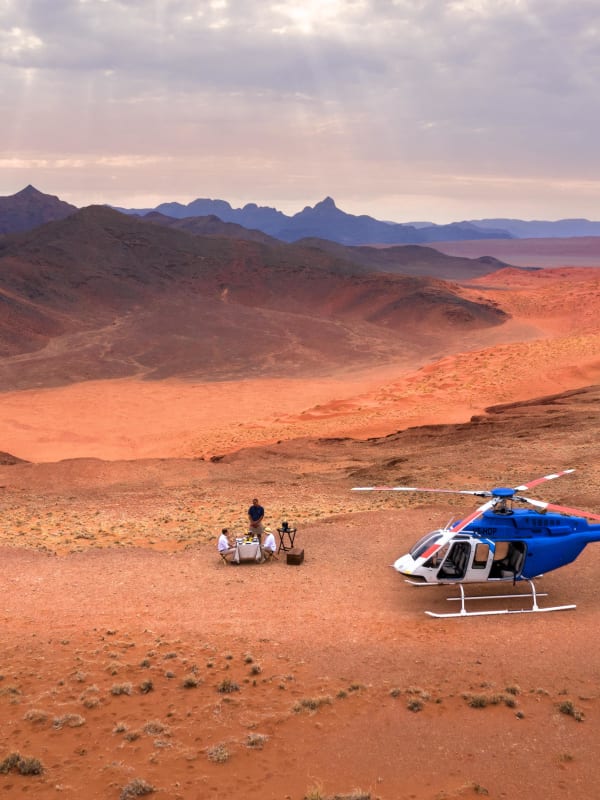
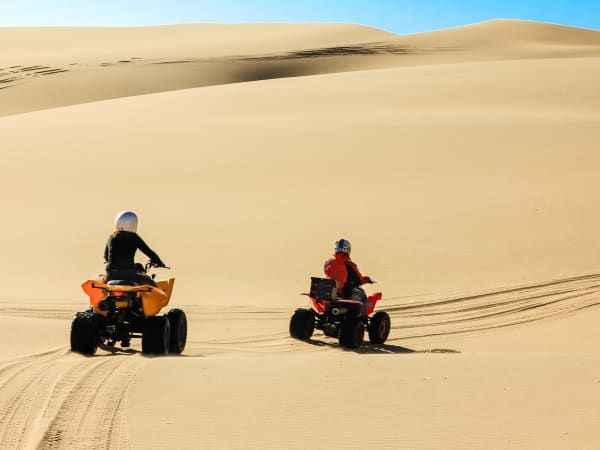
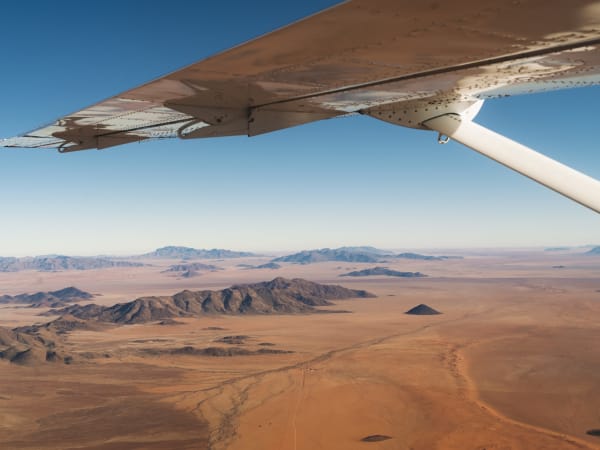
Guided hikes, jeep tours, and quad rides are available in the Namib Desert en masse. A hike over the red sand dunes is also an absolute must. Rides in hot air balloons or flights by helicopter or small aircraft show the fascinating landscape from a breathtaking perspective. The Sesriem Canyon with its rustic rock walls also provides an exciting adventure: this gorge plunges up to thirty meters deep into the earth. At the end of the rainy season and at the beginning of the dry season (April to June) is the best time to travel to Namibia with regard to such activities: The rain decreases and the heat has not yet reached its peak.


Cultural events
- Every year in February, the Bank Windhoek Arts Festival takes place. While local artists showcase their works, the atmosphere is enlivened by theater and dance events.
- In May, Africans celebrate their hard-won multiculturalism at various local venues with Africa Day. This is intended to strengthen coexistence and the joint work of the people.
- And Oktoberfest is also celebrated in Namibia: The former German colony awaits visitors in Windhoek (of course) with plenty of beer and fun games.
- On White Flag Day in October, people gather in the suburb of Ozonde in Herero costumes and with poems for military parades. This celebration is held in honor of the soldiers who fell against the German troops.
Practical tips for your trip to Namibia
Seasonal advantages and disadvantages, photography tips, price examples, and clothing tips – finally, we give you a few pieces of advice for your journey.
High season versus low season: The advantages and disadvantages
The high season is considered to be from July to October – which is why this period is regarded as the best travel time for Namibia. Daytime temperatures are in the moderate range, so they are pleasantly warm. Only in the morning and evening hours can it get a bit cool. Due to the dry season, there is hardly any precipitation. As a result, wildlife gathers around the coveted waterholes – which means good visibility for people to see the animals. However, both the moderate temperatures and the easier wildlife observations attract more people.
Advantages:
- Pleasant temperatures
- Dry weather
- Ideal views of the wildlife
Disadvantages:
- More tourists
The low season includes the months from November to March. The days become hot and humid. The rainy season brings corresponding precipitation, which is heavy but short-lived. The rain also brings nature to life – the plants grow lushly, and the animals roam wildly. However, wildlife is also more dispersed in the vastness of the country, making animal sightings more difficult. The lush vegetation also obscures the view of the animals. However, there are fewer people on site.
Advantages:
- Fewer tourists
- Green landscape
Disadvantages:
- Hot and humid weather
- Heavy but short rainfall
- Dense vegetation can block the view of the wildlife
- Wildlife is harder to spot, as the animals don't gather in one place
Price differences for accommodations and flights
To get to Namibia as cheaply as possible, booking should be done with a lead time of one year. To provide you with a rough orientation, we have listed the prices of Lufthansa with consideration of the one-year lead time as an example. Thus, amounts starting from 780 euros in economy class, 1,050 euros and up in premium eco, and 2,600 euros and up in business class are indicated. Direct flights are usually more expensive than flights with stopovers.
Accommodation prices vary depending on the standard. The low season from November to March is considered cheaper.
Recommended clothing according to the season
In addition to summer clothes for warm to hot regions, you should especially bring warm or long tops and pants for the nights. Long clothing is also suitable as sun or mosquito protection. Breathable fabrics are ideal in warm temperatures. A water- and windproof jacket for rainy days is also recommended.
To be prepared for any weather spontaneously, the classic layered look is helpful: Multiple layers can be easily removed and stored in a backpack. Sturdy footwear including padded socks for hiking and safaris is important to comfortably and painlessly endure long walks. Additionally, a head covering makes sense – this way, you avoid sunstroke. And having sunglasses with UV protection is also important.
In the wild, you should behave as inconspicuously as possible, which is why the clothing should also be kept in natural tones. Long pants are advisable in the bush. Since you will be on the move a lot, comfortable clothing is advantageous. When visiting restaurants (both in hotels and outside), it can be a bit fancier.
Experience the magic of Africa with experts who have explored every corner themselves
Your dream holiday, tailor-made by experts.
Our travel consultants not only admire Africa from afar, but explore the most impressive regions every year to experience the cultures, landscapes and safari experiences first-hand.
From the initial inspiration to the moment you return home full of stories, we will accompany you personally - be it by phone, email or WhatsApp, whenever you need us. Explore the wilderness of Africa, be enchanted by its breathtaking beauty and create unforgettable memories. Together we will create your unique safari adventure!
Experts for your Africa trip